
Tongue frenulum plastic surgery is a minimally invasive dental procedure aimed at correcting the mobility and functionality of the tongue by correcting the elastic fold that connects it to the lower jaw. This fold is responsible for the tongue’s mobility, pronunciation of sounds, and chewing food.
The necessity for tongue frenulum plastic surgery is dictated by natural reasons. A harmoniously developed oral cavity ensures the effective functioning of all its components. Developmental disorders can lead to various pathologies that can affect both individual functions of the oral cavity and the entire dental system.
The standard length of the tongue frenulum in children is approximately 8 mm, while in adults, it can reach 30 mm. It is optimal to perform tongue frenulum plastic surgery in childhood to prevent the development of pathology and its clinical impact on the entire body later on. However, there are situations when the procedure is recommended for adults and even elderly patients.
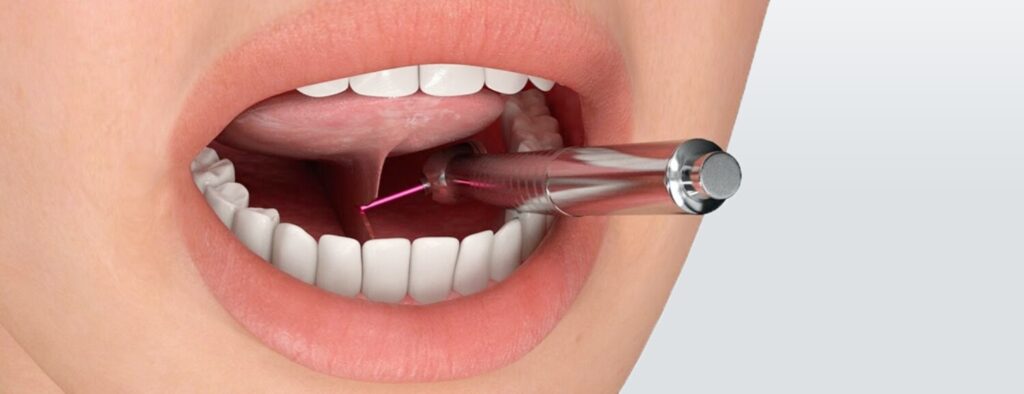
The most common cause of tongue frenulum anomaly is considered to be genetic predisposition (the condition is inherited from one of the parents). However, there are other factors influencing the shape and size of the frenulum, such as:
Timely diagnosis of pathology allows preventing numerous problems for the child as they grow up, so regular preventive check-ups from an early age are necessary.
Modern dentistry offers a choice of one of the following methods of tongue frenulum plastic surgery, depending on the specific clinical picture:
Frenuloplasty – excision of the frenulum with a V- or Z-shaped incision and fixation in another location.
Frenotomy – transverse incision of the frenulum in case of its diagnosis as too short or narrow.
Frenectomy – excision of a certain area of the frenulum if it is too large.
Frenectomy is considered the most invasive and radical method. The operation to excise the tongue frenulum is performed using a scalpel or laser, with laser correction being more comfortable for the patient, as the tissues along the incision edge are cauterized, sealing the blood vessels, which reduces the duration of the rehabilitation period.

After diagnosis, preparatory procedures (coagulogram, X-ray, and others), and oral cavity sanitation, the dentist performs the following manipulations:
1. Anesthesia of the operative area using applicative (placing a swab with an anesthetic under the tongue) and injectable (puncture with a syringe and injection of an anesthetic agent) anesthesia.
2. Fixation of the tongue in the required position with a special device.
3. Incision of the frenulum according to the prepared treatment plan using appropriate instruments (scalpel or laser).
4. Approximation of the wound edges and suturing.
Direct medical manipulations for tongue frenulum excision take no more than 30 minutes during one session.
The recovery period after tongue frenulum excision surgery is short (usually no more than 5 days).
During this period, the patient may experience mild pain and discomfort, which quickly subsides.
To shorten the rehabilitation period and facilitate quick recovery after surgery, it is recommended to follow these instructions:
A successful tongue frenulum excision operation significantly improves the lives of patients, allowing them to experience new sensations and enjoy life to the fullest.
Find out the standard cost of tongue frenulum plastic surgery at ORTHO clinic at the link or during a free consultation with our specialists after diagnosis.
© ORTHO dental clinic2026
Leave your contact details and we will help you choose a specialist and make an appointment at a convenient time.
Залиште свої контактні дані, і ми допоможемо вам обрати спеціаліста та записатися на зручний час.
Ми зв’яжемось з вами найближчим часом