
Extraction of a tooth cyst is a surgical procedure in dentistry aimed at removing a benign growth near the apex of a tooth, filled with pathological content in the form of exudate.
Patients often overlook microscopic defects in their teeth, mistakenly assuming that they pose no significant danger. However, such neglect usually leads to the proliferation of pathology, which gradually penetrates into the internal dental tissues and destroys them, remaining asymptomatic and entirely unnoticed externally until a certain point.
A cyst is a capsule covered with a dense membrane containing bacteria inside. It forms in the human body as a protective reaction in response to the negative influence of microorganisms, limiting their further spread. At the initial stage, a cyst may have microscopic dimensions – only a few millimeters, but it can later grow to 1-2 centimeters.
The causes of cyst formation can range from poor hygiene with subsequent development of dental disease to trauma, immunodeficiency, and many other factors. The consequences may include persistent toothaches, tooth loss, thinning of the jawbone, fever, overall malaise, and even death.
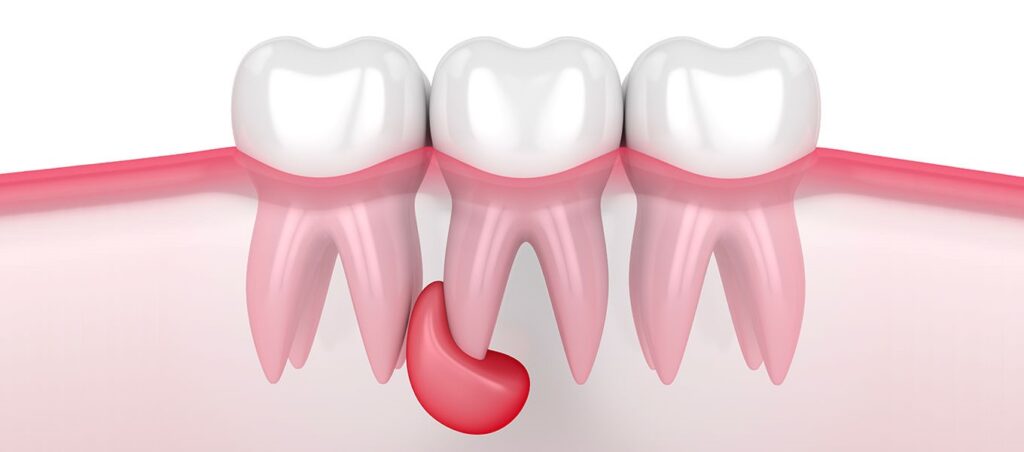
At the initial stages, cyst treatment is carried out conservatively through canal cleaning, antiseptic treatment, and medication. However, if the pathology has reached significant proportions, this method becomes ineffective, and more radical surgical intervention is necessary.
Depending on the stage of tooth cyst development and its localization, the following surgical treatment methods are distinguished in dentistry:
This is indicated for the removal of a small cyst that has developed within the vicinity of 1-2 teeth. The procedure involves cyst enucleation after anesthesia and elevation of the supracrestal flap, followed by removal of the affected areas of the root and antiseptic treatment. It is often performed concurrently with root end resection and is the simplest and shortest operation (lasting from 15 to 40 minutes during one session).
This is used for large purulent growth that has affected the area of 3 or more teeth. During the operation, after anesthesia, the mucosal flap is elevated, the cyst wall is removed, and the contents are cleaned and antiseptically treated. After the procedure, a tampon soaked in iodine is applied to the wound, which needs to be changed every 6-7 days due to mucous secretion. Often, treatment includes duplicate anti-inflammatory therapy.
This method is used in cases of chronic periodontitis, traumatic damage to one root, and when there is an abnormality in the permeability of dental pockets. Treatment involves amputation of one of the roots of a multi-rooted tooth together with a portion of the crown, followed by cleaning, antiseptic treatment, and prosthetics or filling. It is considered the most traumatic procedure.
The removal of a tooth cyst at our clinic can be either a straightforward or a complex procedure depending on the stage of the disease progression and certain individual patient criteria. However, the patient does not experience pain during treatment due to anesthesia, so all medical manipulations are carried out in comfortable conditions.
The immediate stages of the tooth cyst removal procedure include:
If necessary, temporary or permanent filling is applied, and anti-inflammatory therapy is prescribed.
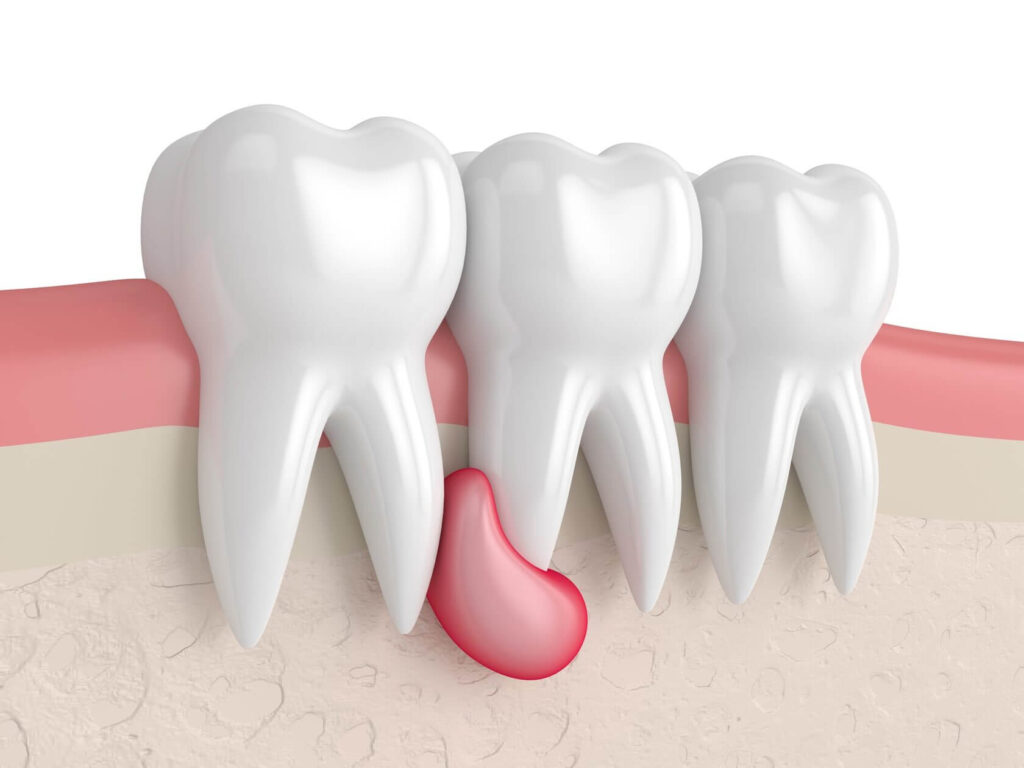
The recovery period after tooth cyst removal surgery typically lasts for 10-14 days, sometimes longer. This term is individual for each patient.
For the first 2-3 days, patients may experience swelling, slight pain, and discomfort in the affected area. If severe pain persists beyond the specified period, bleeding or suture rupture occurs, immediate medical attention is required. During rehabilitation, medication should only be taken as prescribed by a doctor.
Standard recommendations include:
It is essential to remember that the best method of preventing disease is through prophylaxis, which includes quality oral hygiene and regular preventive check-ups with a dentist.
Learn about the prices for tooth cyst removal by following the link or during a free consultation at our clinic.
© ORTHO dental clinic2026
Leave your contact details and we will help you choose a specialist and make an appointment at a convenient time.
Залиште свої контактні дані, і ми допоможемо вам обрати спеціаліста та записатися на зручний час.
Ми зв’яжемось з вами найближчим часом