
During the process of chewing food, human teeth are exposed to numerous microorganisms (bacteria) capable of causing harm to the hard and soft tissues in the oral cavity. Most often, food residues get trapped in the interdental spaces, making them difficult to clean using conventional methods at home. Subsequently, soft plaque forms, which crystallizes, changing the enamel’s white color to a darker shade and even descending below the gums, forming deep periodontal pockets.
Thanks to recent technological advancements in dentistry, effective methods have emerged to address these issues. Air Flow technology is an efficient and painless method of teeth cleaning that, unlike chemical methods, acts gently without causing damage to the enamel and surrounding soft tissues.
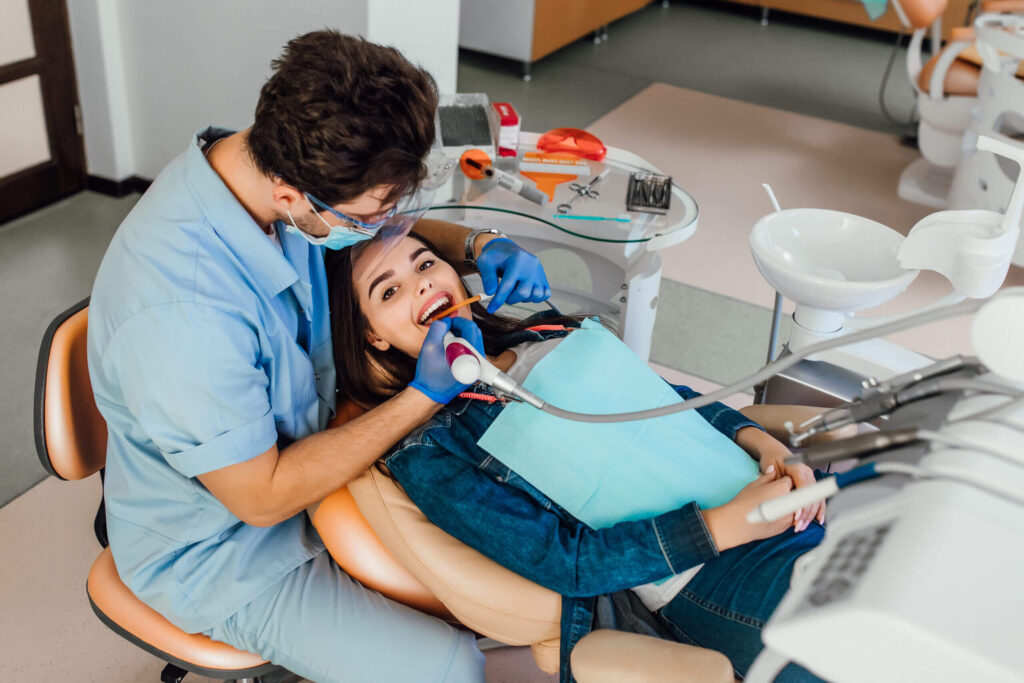
The dentist provides the patient with protective glasses and a cap, protects the mucous membrane with a rubber dam, connects the Air Flow device, and positions the saliva ejector.
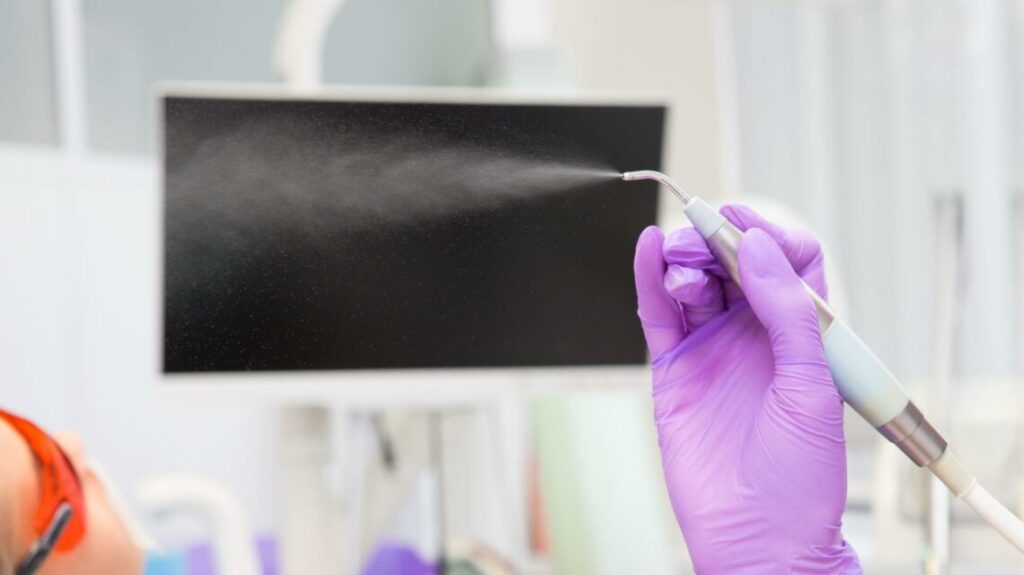
Using a special device that emits a mixture of air and water aerosol with dental soda particles, the dentist gently removes dental plaque from the interdental spaces and subgingival areas with careful movements. The pressure and intensity of the cleaning mixture can be adjusted to suit the patient's comfort level and taste, minimizing discomfort and effectively cleaning problem areas. The procedure is repeated for each tooth individually.
After the procedure, the dentist polishes the teeth to make them smoother, preventing bacterial accumulation over time, and strengthens the enamel with fluoride ions.
Our specialists recommend that patients familiarize themselves with the equipment and products used for professional teeth cleaning. This is because some unscrupulous clinics may use counterfeit Chinese devices and mixtures.
Depending on the specific clinical situation, the dentist may recommend the most optimal treatment – ultrasonic or Air Flow cleaning. However, depending on individual preferences or other reasons, patients may choose one method of professional teeth cleaning over another.
It should be noted that Air Flow may not effectively remove hard plaque, whereas ultrasonic cleaning can easily break down hard deposits. Thus, both methods are often complementary during professional cleaning.
If a patient chooses a different method than what the dentist suggests, they take the risk of ineffective treatment and wasted finances.
Professional Air Flow teeth cleaning is recommended regularly, at least once every 6 months. In some cases, it may be done once every 3 months.
To inquire about the cost of the Air Flow professional teeth cleaning procedure, we recommend clicking the link in the “Prices” section or visiting our clinic for a free consultation.
© ORTHO dental clinic2026
Leave your contact details and we will help you choose a specialist and make an appointment at a convenient time.
Залиште свої контактні дані, і ми допоможемо вам обрати спеціаліста та записатися на зручний час.
Ми зв’яжемось з вами найближчим часом