
A ceramic bracket system is a conditionally non-removable orthodontic structure consisting of ceramic bracket locks, arches, and ligatures, which are attached to the outer surface of the teeth. Such brackets are designed to correct various malocclusions and align misaligned teeth (shifted, tilted, or rotated around the axis).
Not everyone can boast of naturally straight and beautiful dental arches from birth. Most often, due to genetic predisposition, the tooth alignment is somewhat distorted. With age and/or due to harmful habits, as well as mechanical damage, the situation with teeth exacerbates: large gaps form, teeth grow in different directions. These problems are most bothersome to people with an active lifestyle who engage in daily communication with others, such as actors, TV presenters, and politicians.
Today, ceramic bracket systems are one of the most popular methods of treating malocclusions and misaligned teeth, not only among the “powerful” of this world but also among ordinary citizens due to technological advancements. The ceramic system has made a breakthrough in orthodontic treatment, becoming an equally effective and aesthetic way to correct crooked teeth. Thanks to the ceramic structural elements, the brackets on patients’ teeth are practically identical in color and strength to tooth enamel, so they are hardly noticeable to others, allowing for communication without embarrassment while wearing the appliance.
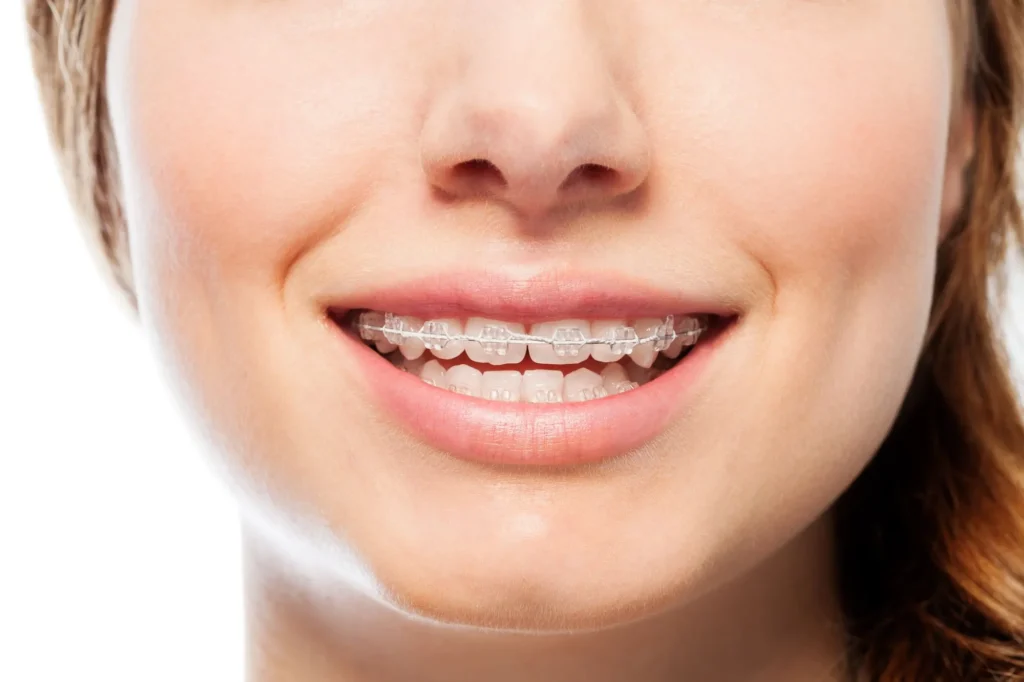
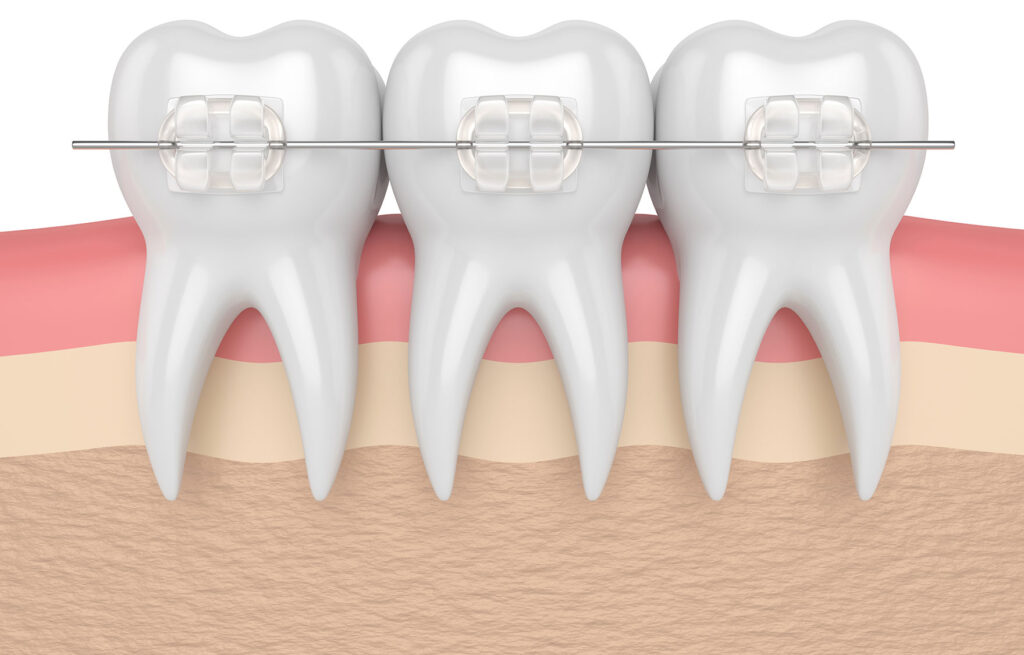
The ceramic bracket system consists of brackets, arches, and ligatures:
The combination of all three structural elements on a tooth, due to the action of weak and inconspicuous forces, allows it to be moved into the correct position according to the bends and shape of the arch.
Ceramic bracket systems, depending on the composition of the structural elements, are divided into two major groups:
Ligatures are used in the design to connect the arches with the bracket locks. Due to continuous and strong pressure, the arches gradually move misaligned teeth imperceptibly towards the correct position. Such brackets require more frequent visits to the orthodontist for adjustment compared to ligatureless products.
Ligatures are absent in the design. Tooth movement occurs through pressure from the arch on the teeth at the points of contact – in the form of clip-on bracket locks. Treatment with such brackets is somewhat shorter than with ligatured counterparts and does not require frequent visits to the dentist for adjustment.
Includes an examination of the patient's oral health, diagnosis of pathology, possible auxiliary examinations, consultation with related specialists. This stage concludes with discussing the desired outcome with the patient and developing an optimal treatment plan, taking impressions of the teeth, and sending them for fabrication to a dental laboratory. In some cases, oral cavity sanitation, extraction of extra teeth, or treatment of other dental diseases may be necessary.
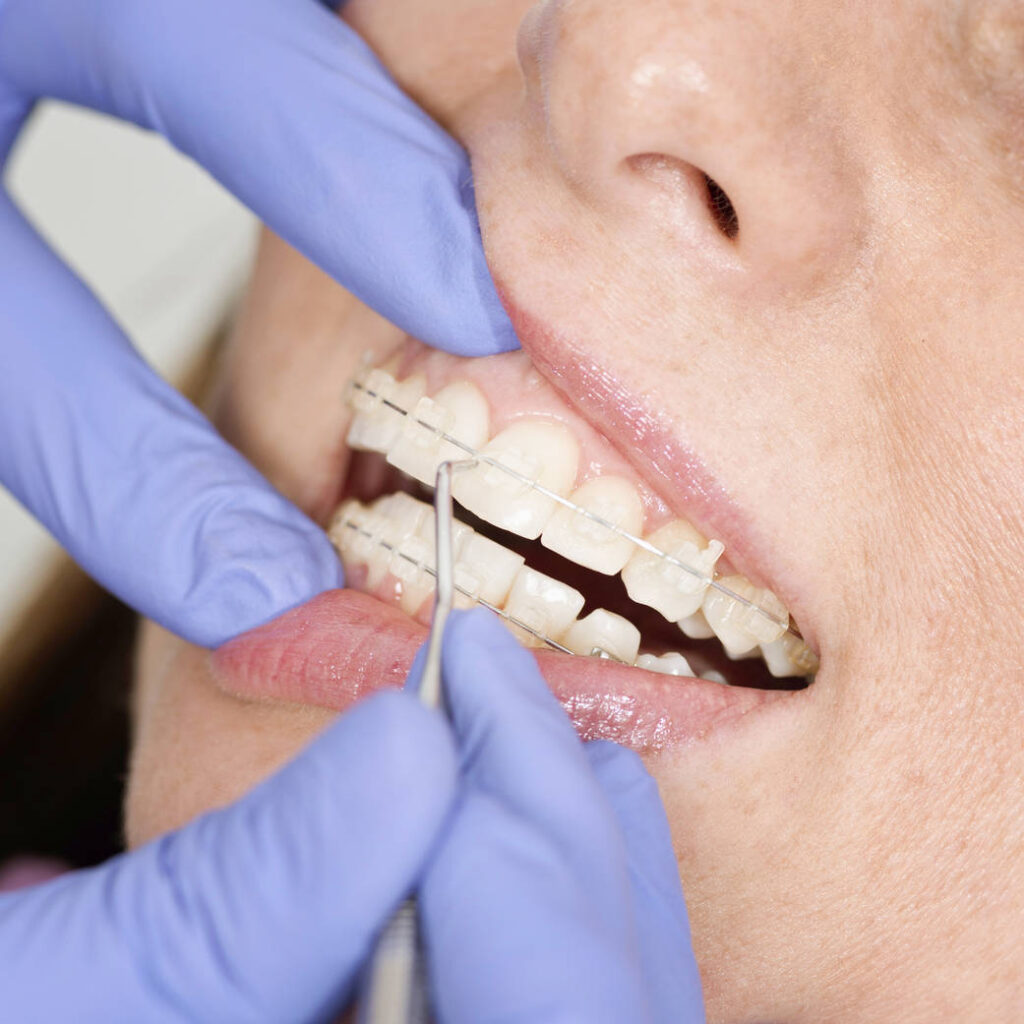
To ensure a strong fixation of the bracket on the tooth surface, each tooth is degreased. Then, the brackets are attached to the teeth using a special adhesive that cures under the influence of ultraviolet light from a lamp. Each bracket lock is connected to the arch with ligatures or clips and, if necessary, additional elements are installed.
The orthodontist outlines the regularity of preventive examinations, rules, and recommendations for caring for ceramic brackets, approximate treatment duration based on the specific clinical picture, and so on.
The most common question patients ask the specialists at ORTHO clinic is, “Which material for brackets is best?” There is no definitive answer to this question because much depends on the degree of development of the specific clinical picture, patient preferences, and financial capabilities.
If we focus on the aesthetics of treatment, then ceramic brackets are undoubtedly more aesthetic due to the material similar to tooth enamel in physical and chemical characteristics. However, due to the same characteristics that are inferior to metal, the treatment duration is longer by 3-4 months. Additionally, it is worth remembering that ceramics are a more expensive material than its metal counterpart.
In any case, it is necessary to listen to the orthodontist and based on their recommendations, give preference to one type of ceramic or metal brackets over another.
Find out the cost of treatment with a ceramic bracket system by following the link, or come to our dental clinic for a free consultation.
© ORTHO dental clinic2026
Leave your contact details and we will help you choose a specialist and make an appointment at a convenient time.
Залиште свої контактні дані, і ми допоможемо вам обрати спеціаліста та записатися на зручний час.
Ми зв’яжемось з вами найближчим часом