
A prosthesis is an artificial removable or fixed orthopedic structure that is placed in the oral cavity to restore the anatomical form of missing teeth and jaw functions. These products are made from various materials and are attached to the jaw by various means.
Tooth decay occurs for various reasons: trauma, poor hygiene leading to dental diseases, genetic factors, and many others, resulting in the tooth structure being partially or completely destroyed. As a result, individuals may experience difficulty chewing food, altered speech, communication difficulties, and even risk to their overall health.
To prevent and/or address the aforementioned problems in dentistry, there is a whole area called prosthodontics, which, through removable or fixed constructions, restores all functions of the dental-jaw apparatus to normal.
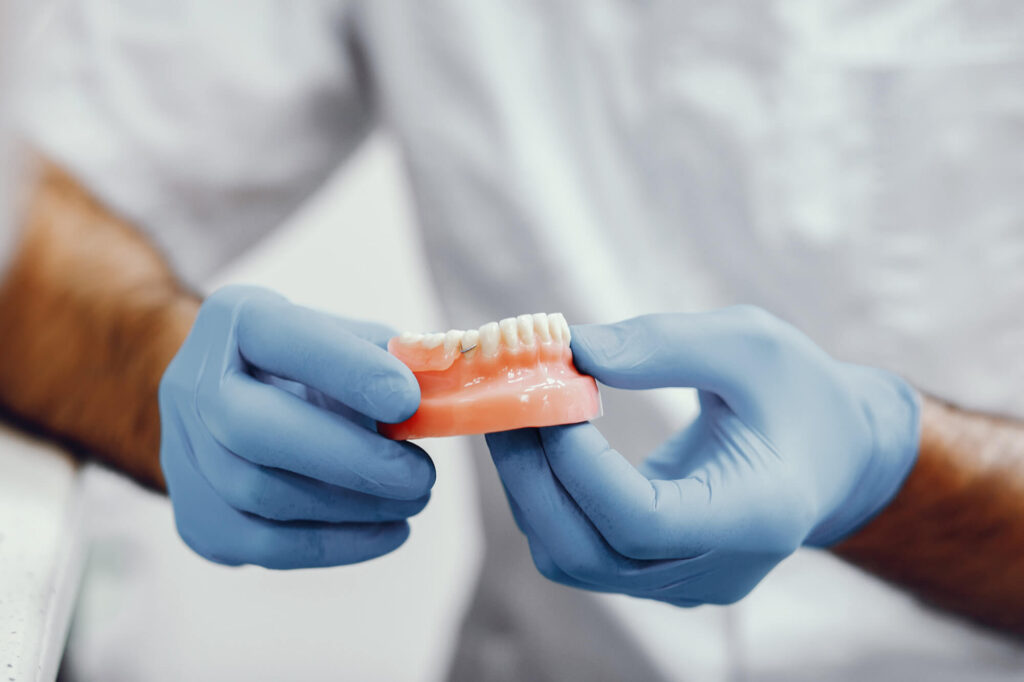
Modern dentistry utilizes a wide range of materials for prosthetic restorations, which, in terms of their physico-chemical properties, are not inferior to natural dental tissues, and in some cases even surpass them. These materials are often stronger, more durable, and more aesthetic.
The list of the most popular materials used for the manufacture of dental prostheses is as follows:
1. Plastics – a dental polymer component used in both removable and fixed orthopedic constructions.
2. Composites – natural substances that harden under ultraviolet light, thereby acquiring a predetermined shape.
3. Ceramics – an inorganic substance with properties identical to natural enamel indicators.
4. Metals and alloys – titanium, zirconium dioxide, chromium, cobalt, and other representatives of Mendeleev’s chemical table, which do not oxidize.
These materials can be used either as a single component of a dental prosthesis or as part of a multi-component orthopedic structure.
By its nature, prosthetics is divided into 2 large groups: removable and fixed.
Involves the installation of a prosthesis in the oral cavity, consisting of a soft plastic palate and artificial teeth placed on it, which replace missing teeth. Patients adapt to such a design quite quickly, can remove and put it on at any time as desired. Care is relatively simple, and the installation of the product is not noticeable to others. It is used to restore individual dental units or in complete edentulism.
involve the installation of a more complex orthopedic structure in the form of a bridge, consisting of a metal frame and crowns placed on it, which are permanently fixed in the patient's oral cavity on pre-prepared abutment units. It is used to replace/restore from 1 to 4 missing teeth, usually in the lateral section of the jaw, located next to each other. Thanks to the robust construction, the orthopedic product is capable of withstanding significant chewing loads.
The dentist collects medical history, conducts an examination of the patient's oral health, reviews the results of additional tests, and consults with other specialists if needed. During the examination, the dentist assesses the number of teeth requiring prosthetic treatment, identifies the abutment teeth, clarifies the patient's preferences, and develops an optimal treatment plan.
The prosthodontist addresses other dental conditions, sanitizes the oral cavity, prepares the abutment teeth (if necessary, prepares them slightly), and takes silicone impressions of the teeth. All collected materials and data are sent to the dental laboratory for prosthesis fabrication.
In the laboratory, a technician fabricates the prosthesis framework and artificial crowns based on the individual parameters of the patient's teeth using obtained data, gypsum models, and wax modeling. High-precision computer-programmed machines, high-pressure and high-temperature techniques, articulators, glazing, and adjustment of the product are utilized during the process. Upon completion of all work, the technician provides the artificial teeth with a natural appearance by forming fissures (cusps and grooves) on the tooth surface using brushes and special tools.
The dentist places the finished product in the patient's oral cavity, verifies the accuracy of the technician's work, the degree of jaw closure, and occlusion. In case of defects, the sample is sent back to the laboratory for refinement; in a positive scenario, the prosthesis is fixed permanently on the abutment units.
Depending on the specific clinical picture, patient preferences, and financial capabilities, as well as the material of manufacture, in dentistry, there are several types of orthopedic prostheses:
1. Metal – has a sturdy frame and low cost, but is practically not used due to its bulkiness, low aesthetics, and the risk of damaging the soft tissues in the patient’s mouth.
2. Plastic – used in the correction of dental defects as a temporary measure, being light, inexpensive, aesthetic, and hypoallergenic.
3. Metal-ceramic – consists of a sturdy metal frame covered with ceramics, making the construction light, indistinguishable from natural teeth, and unnoticeable to others.
4. Zirconium – made from zirconium dioxide, which is very strong, light, aesthetic material that excludes any harmful effects on the surrounding tissues and effectively performs its functions.
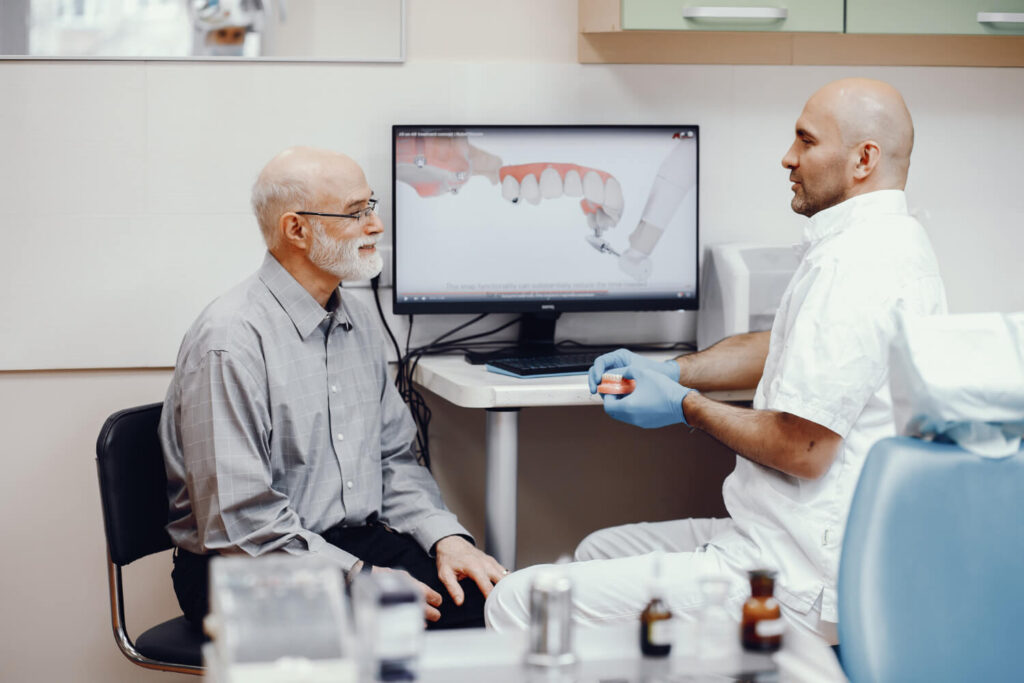
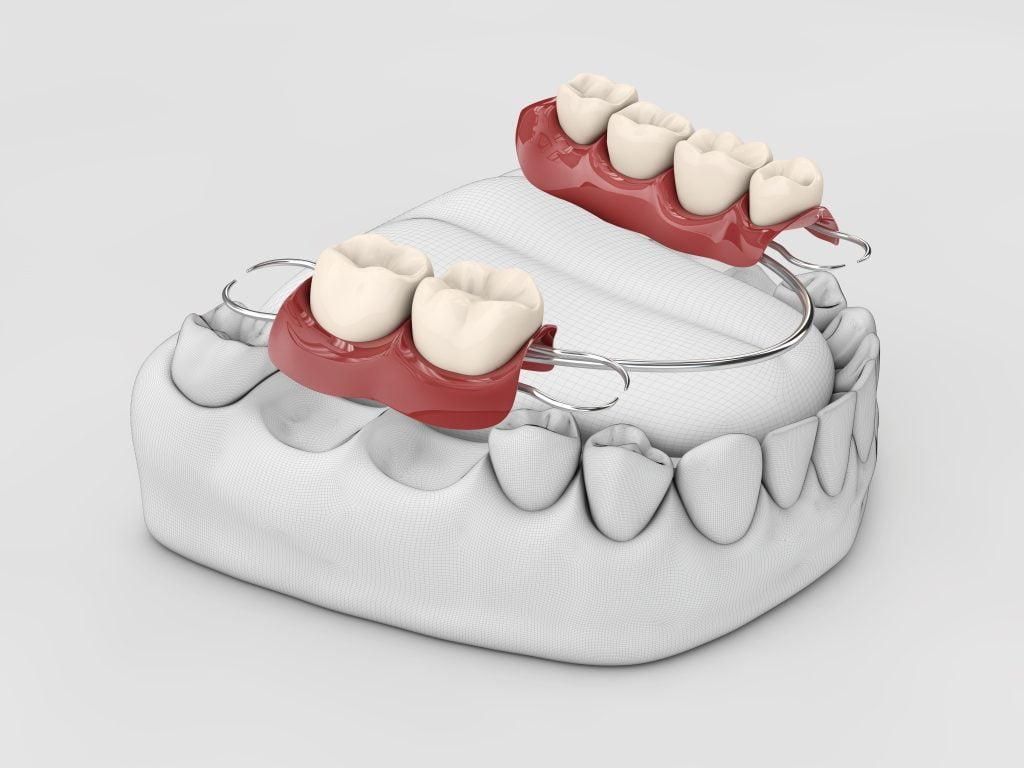
The care requirements for removable and fixed dental prostheses are relatively simple and do not require complex manipulations:
1. Follow proper hygiene practices at least twice a day or after each meal.
2. Clean the lateral and contact surfaces of fixed prostheses, as well as the palate and inner parts of removable ones, with gentle circular movements.
3. Prefer irrigators over toothpicks and floss, rinse your mouth more frequently.
4. Regularly undergo preventive check-ups and professional cleanings.
The cost of fabrication and installation of dental prostheses at the ORTHO clinic can be found by following the link provided or during a free consultation with our specialists.
© ORTHO dental clinic2026
Leave your contact details and we will help you choose a specialist and make an appointment at a convenient time.
Залиште свої контактні дані, і ми допоможемо вам обрати спеціаліста та записатися на зручний час.
Ми зв’яжемось з вами найближчим часом